If You Don’t Want a Sarcastic Answer: Elevating Your Sublimation Projects with Professional Digital Assets
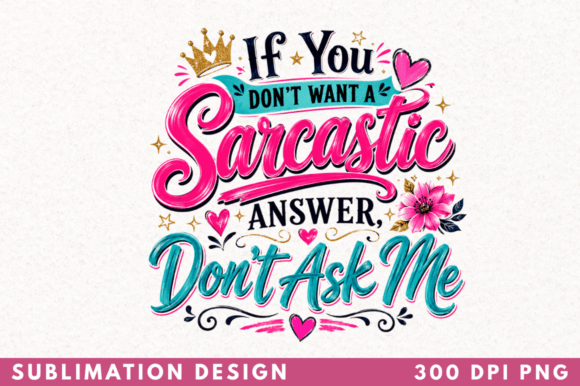
In the rapidly evolving world of print-on-demand and DIY crafting, the difference between a hobbyist project and a professional-grade product often lies in the quality of the source file. When creators search for designs that resonate with modern humor and aesthetic trends, they frequently encounter the phrase If You Don’t Want a Sarcastic Answer. This specific design motif has gained traction not merely as a textual statement, but as a versatile sublimation asset that bridges the gap between witty commentary and high-quality visual presentation. Understanding how to leverage this digital resource requires more than just downloading a file; it demands an appreciation for technical specifications, material compatibility, and strategic application.
For small business owners, crafters, and print-on-demand entrepreneurs, selecting the right digital asset is a critical decision. The market is saturated with low-resolution images, poorly layered vectors, and designs that require extensive editing before they are usable. In contrast, a high-resolution PNG with a transparent background offers a streamlined workflow. This article explores the practical implications of using such a design, comparing it against alternative formats and discussing where it fits best within a broader creative strategy.
The Distinct Value of High-Resolution Transparent PNGs
The core advantage of a ready-to-print sublimation design lies in its technical readiness. A standard JPEG image, for instance, comes with a white or colored background that must be manually removed before printing on anything other than white paper. This extra step introduces potential errors, such as jagged edges or leftover pixels, which can ruin the final product. A transparent background PNG eliminates this friction entirely. When you utilize a design like If You Don’t Want a Sarcastic Answer in this format, you are ensuring that only the intended graphic transfers to your substrate.
This distinction is particularly vital for sublimation printing, a process where heat and pressure turn solid dye into gas, bonding it with polymer-coated surfaces. Unlike vinyl cutting, where weeding excess material is part of the process, sublimation prints exactly what is on the paper. If your digital file includes unwanted background noise, it will appear on your mug, t-shirt, or tote bag. Therefore, the "no editing needed" claim associated with premium digital downloads is not just a convenience feature; it is a quality assurance measure that protects the integrity of the final product.
Comparing Sublimation to Other Crafting Methods
To determine if this digital download is the right choice for your project, it is helpful to compare sublimation with other popular crafting techniques. Each method has distinct tradeoffs regarding durability, cost, and ease of use.
- Sublimation vs. Heat Transfer Vinyl (HTV): HTV involves cutting shapes from colored vinyl and pressing them onto fabric. While HTV is excellent for simple shapes and solid colors, it struggles with complex gradients, photographs, or detailed typography. The If You Don’t Want a Sarcastic Answer design, likely featuring nuanced typography or artistic elements, would be difficult and time-consuming to replicate with HTV. Sublimation allows for full-color, photo-realistic prints that feel like part of the fabric rather than a layer on top.
- Sublimation vs. Direct-to-Garment (DTG): DTG printing is similar to sublimation in that it prints directly onto the garment. However, DTG requires expensive industrial printers and is generally less cost-effective for small batches or single items. For independent creators using home equipment, sublimation remains the most accessible route for high-quality, full-color designs.
- Sublimation vs. Screen Printing: Screen printing is ideal for large runs of simple designs but prohibitive for one-off custom items due to setup costs. A digital PNG download allows for infinite customization without the overhead of screen creation.
When evaluating these options, the digital sublimation file stands out for its versatility in low-volume, high-customization scenarios. It empowers creators to produce professional results without the capital investment required for industrial machinery.
Versatility Across Products and Platforms
One of the strongest arguments for investing in a high-quality digital asset is its adaptability. The same If You Don’t Want a Sarcastic Answer PNG can be applied across a wide range of products, maximizing the return on your initial purchase. This cross-platform compatibility is essential for creators looking to diversify their inventory without designing new assets for each item.
Apparel and Soft Goods
For t-shirts, the design works best on polyester or poly-blend fabrics, which hold sublimation dye effectively. The transparent background ensures that the text and graphics blend seamlessly with the fabric color, provided the base shirt is light-colored. Beyond apparel, this design translates well to tote bags and pillows, offering a trendy, professional touch to home decor and accessories.
Hard Surfaces and Accessories
Sublimation is not limited to fabric. The high-resolution nature of the file makes it suitable for mugs, tumblers, and phone cases. These items require coatings that accept sublimation ink, but once prepared, the result is durable and dishwasher-safe. The clarity of a 300 DPI (dots per inch) or higher PNG ensures that text remains crisp even when wrapped around curved surfaces.
Software Compatibility
A key consideration for any digital download is software integration. This PNG file is compatible with a broad spectrum of design tools, including:
- Cricut Design Space and Silhouette Studio: Ideal for users who want to combine the sublimation print with cut-out shapes or additional vinyl elements.
- Canva: Perfect for quick mockups and social media marketing materials.
- Adobe Photoshop: Best for advanced users who may want to adjust color profiles or add additional effects before printing.
This universal compatibility ensures that regardless of your technical skill level or preferred workflow, the file can be integrated smoothly into your production process.
Decision Factors: When to Choose This Design
While the benefits are clear, it is important to recognize when this type of digital asset is the appropriate solution. The If You Don’t Want a Sarcastic Answer design is ideal for creators who value efficiency and professionalism. It suits those who want to avoid the learning curve associated with vector illustration or complex photo editing. If your goal is to launch a product line quickly or test a new niche with minimal risk, a pre-made, high-quality PNG is a strategic choice.
However, there are limitations to consider. Sublimation requires light-colored substrates; the design will not show up on dark fabrics unless specialized transfer papers are used, which can alter the hand-feel of the garment. Additionally, because this is a digital download, there is no physical product shipped. Users must have access to a sublimation printer, sublimation ink, and heat press equipment. If you lack this hardware, the file alone will not yield a finished product.
Furthermore, color accuracy can vary based on monitor settings and printer profiles. It is advisable to print a test sheet on regular paper to check size and placement before committing to sublimation paper and blank products. This small step can save significant material costs in the long run.
Final Thoughts on Creative Implementation
Incorporating a design like If You Don’t Want a Sarcastic Answer into your portfolio is more than just adding a funny quote; it is about leveraging a professional-grade asset to enhance your brand’s perceived value. By choosing a high-resolution, transparent PNG, you eliminate technical barriers and focus on what matters most: creating products that resonate with your audience. Whether you are producing custom mugs for a corporate gift, trendy t-shirts for an online store, or personalized gifts for friends, the quality of your source file dictates the quality of your outcome. Evaluate your equipment, understand your materials, and use this digital resource to bring your creative ideas to life with precision and style.